Small startup team; I led most front-end and app-layer surfaces. Deeper infra/contract work was shared with the core team.
What I directly owned
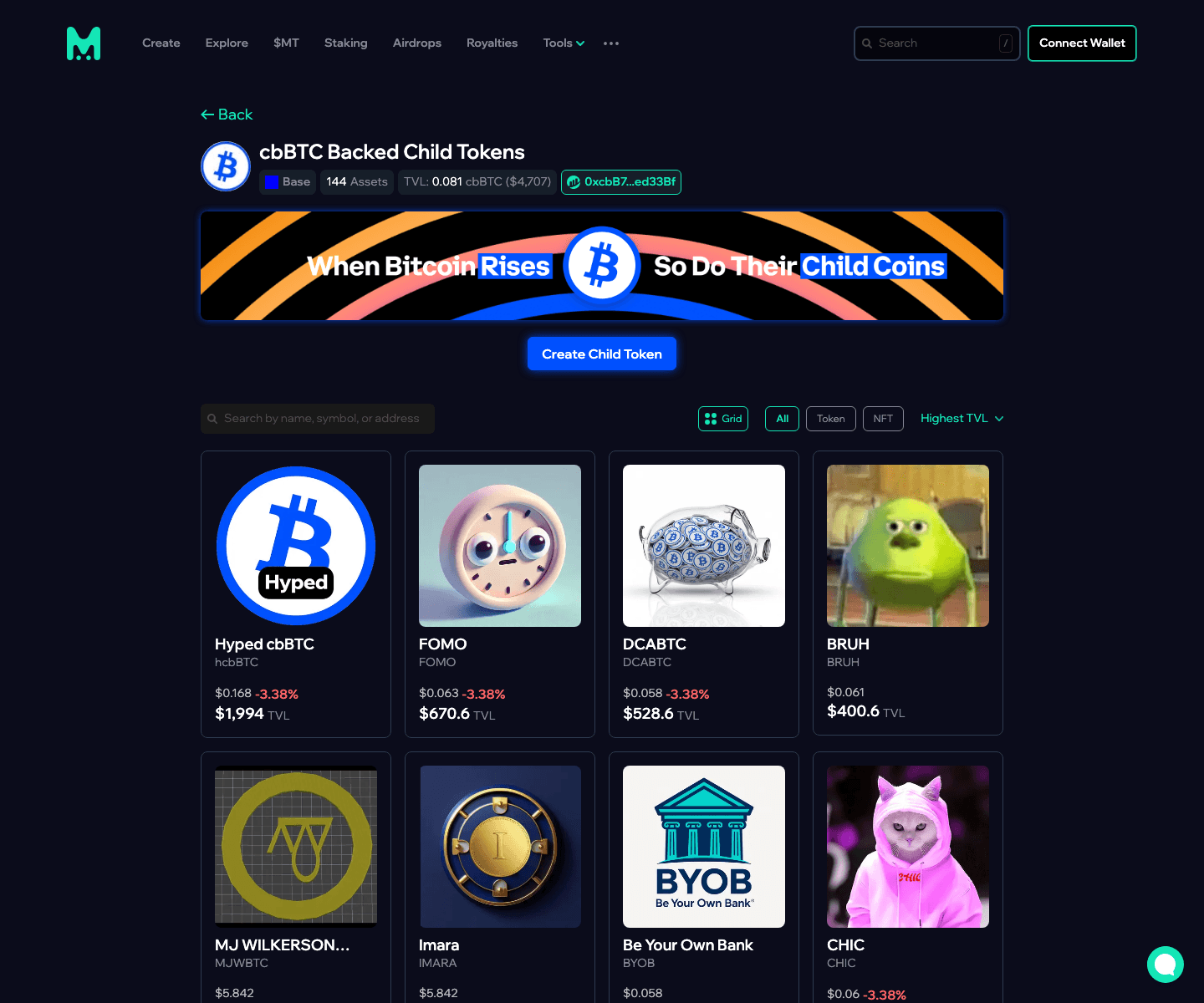
Most Mint Club front-end surfaces (if you use mint.club, most of the front-end is mine)
Swap, staking, lockup, and airdrop tools
Smart-contract ↔ front-end integration
Backend data persistence and user dashboards
mfer-backed token product — strongly led, including community activation and viral traction
What I influenced
Bonding-curve and token-backing product direction
Base-era featuring and child-token discovery
SDK examples and workshop apps
Proof
mint.club live surfaces, public Mint Club posts, and the GitHub commit trail
01
Primitive
Mint Club’s hard problem was making token-backed markets and bonding curves feel like usable product surfaces instead of raw crypto mechanics. My work sat where primitives became interfaces: launch, swap, discover, stake, reward, and teach.
02
Artifact
Product/front-end surfaces and demos across Mint Club: token-backed asset pages, child/sibling token discovery, mfer/Base views, cross-chain swap UX, staking/reward pools, Mint Club SDK examples, Mintdrop, and Base/Farcaster surfaces.
Product and front-end/app-layer work: surfaces, flows, demos, SDK examples, and the public language around making token mechanics usable.
Repeated problem
Every feature had the same job: make an abstract onchain mechanic legible enough for projects, holders, and builders to use without needing protocol context first.
Proof shape
The strongest evidence is not one metric. It is the combination of GitHub commits, product screenshots, Mint Club posts, Base-era updates, and workshop demos across multiple years.
stake NFTs/tokens, earn yield, support 10 early projects
What went right
The same product muscle repeated for years: turn bonding curves, token backing, swaps, staking, and reward mechanics into screens people could actually operate.
Mint Club forced product clarity because the primitive is abstract; the interface had to show action, value, risk, and proof without protocol lectures.
The Base/Farcaster push created a bridge from token infrastructure into social distribution and miniapp education.
What went wrong
A lot of the work is distributed across many surfaces and commits, so it needs an evidence trail rather than one clean launch page.
Token dashboards can look like DeFi noise if the portfolio does not explain the user action and product intent.
Some public posts prove launches and features, but exact ownership boundaries still need careful wording.
Next bet
Turn Mint Club into a real case study with three artifact strips: product surface, SDK/workshop app, and growth metrics. The page should show years of accumulated product work, not one screenshot.